
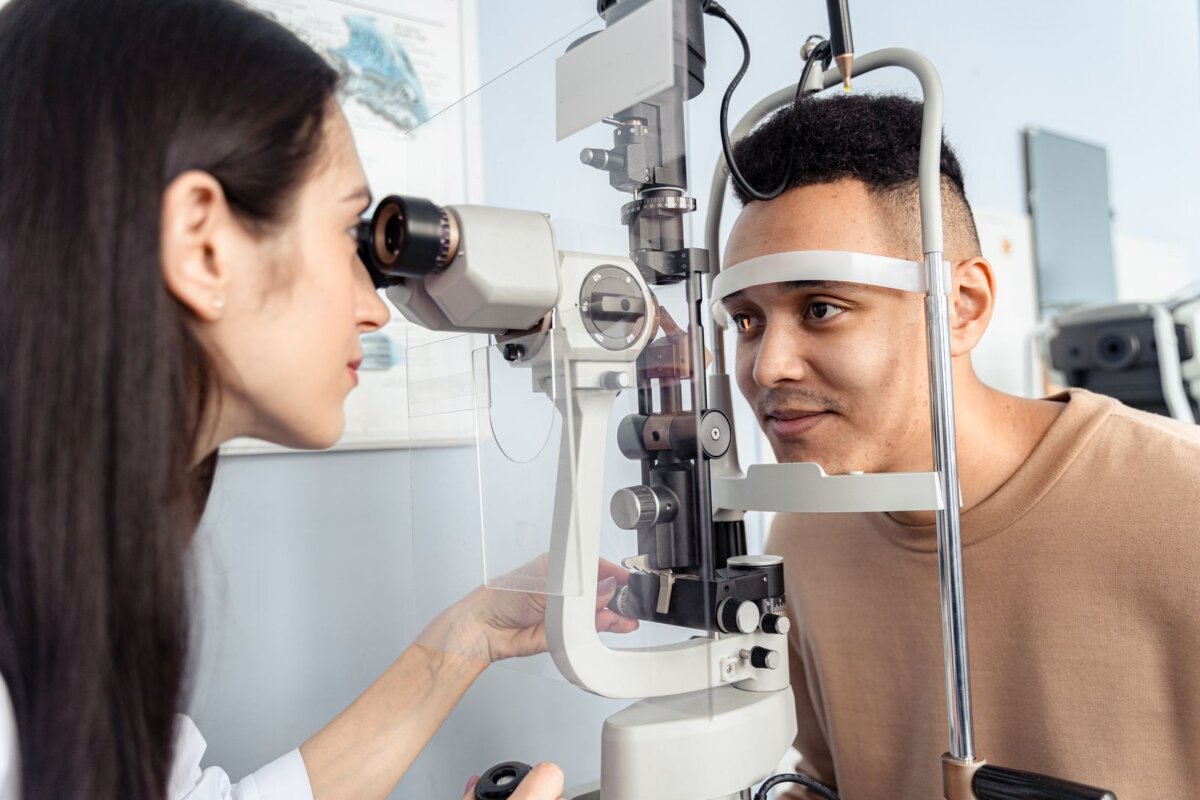
Pink eye treatment in Pakistan is turning into a daily search this monsoon, as hospitals in Karachi, Lahore, and Islamabad report dozens of new conjunctivitis cases every day. If your eyes have suddenly turned red, gritty, and watery, you are not alone — and you do not need to sit in a crowded eye clinic waiting room to find out what is wrong and how to treat it safely.
Every monsoon, Pakistan’s humid climate, standing water, and crowded public spaces create ideal conditions for the Adenovirus and other pathogens that cause acute conjunctivitis, commonly called “pink eye” or “red eye.” What starts in one classroom, office, or household can spread to an entire family within 48 hours. The good news is that most cases can be assessed, diagnosed, and treated quickly — and increasingly, that first assessment does not have to happen in person.
Table of Contents
- What’s Driving the Pink Eye Outbreak Across Pakistan
- Why Conjunctivitis Is a Bigger Problem in Pakistan Than It Looks
- How CARELINE’s eEVA™ Diagnoses Pink Eye Remotely
- What You Can Do at Home While You Wait for Your Appointment
- How to Book a CARELINE Examination
- Frequently Asked Questions
What’s Driving the Pink Eye Outbreak Across Pakistan
Pink eye treatment in Pakistan has become a recurring monsoon-season need because the same weather pattern that brings relief from summer heat also creates the perfect breeding ground for viral and bacterial eye infections. Health authorities have repeatedly documented seasonal spikes in acute conjunctivitis linked to the Adenovirus, which spreads through direct contact, contaminated water, shared towels, and even air-conditioned classrooms and offices where dozens of people share the same surfaces.
Karachi typically reports the earliest and largest outbreaks, with cases then moving to Lahore, Rawalpindi, Islamabad, and parts of Khyber Pakhtunkhwa within a few weeks. Public and private hospitals describe patients arriving with red, swollen eyes, thick discharge, and a gritty “sand in the eye” sensation that makes it hard to work, study, or sleep. Because the infection is highly contagious — often spreading before a person even realizes their eyes are infected — entire families and classrooms can be affected within days.
Doctors also warn that self-diagnosis is unreliable. Viral conjunctivitis, bacterial conjunctivitis, and allergic conjunctivitis can look almost identical to an untrained eye, yet they require completely different treatment. Using the wrong eye drop, especially an unnecessary antibiotic, can prolong the infection, mask a more serious problem, or contribute to antibiotic resistance — a growing concern flagged by Pakistani ophthalmologists during every outbreak season.
Why Conjunctivitis Is a Bigger Problem in Pakistan Than It Looks
On the surface, pink eye seems like a minor, self-limiting nuisance. In Pakistan’s specific context, it is a bigger public health problem for three reasons: population density, water quality, and access to specialist eye care outside major cities.
According to the World Health Organization’s Pakistan country office, the country continues to face significant gaps in access to timely specialist care, particularly outside Karachi, Lahore, and Islamabad. When a family in a smaller town or rural district notices a child’s eyes turning red, the nearest ophthalmologist may be hours away. Many households resort to pharmacy-counter advice or leftover antibiotic drops from a previous illness — exactly the self-medication pattern that clinicians warn against.
A peer-reviewed review published on PubMed Central examining Pakistan’s recurring acute conjunctivitis outbreaks highlights how overcrowded urban centres, inconsistent water sanitation, and limited public awareness about hygiene practices combine to accelerate transmission every year. The same research notes that outbreaks disproportionately affect school-age children and workers in crowded environments such as factories, markets, and public transport — groups that often cannot afford to miss school or work for a same-day hospital visit.
This is precisely the gap telehealth is built to close. A condition that is visually diagnosable, time-sensitive, and highly contagious is one of the strongest possible cases for a remote clinical examination that still gives a doctor an actual, close-up look at the eye — not just a phone call describing symptoms.
Pink eye rarely arrives alone during monsoon season. The same humidity and standing water that drive conjunctivitis outbreaks also fuel dengue fever and a spike in skin irritation and infections, which we covered in our earlier guide on skin disease in Pakistan. Families dealing with red eyes should stay alert for fever, body aches, or a rash appearing alongside eye symptoms, since these can point to a broader monsoon illness rather than conjunctivitis alone.
The clinical takeaway from this research is consistent: conjunctivitis in Pakistan is not simply a two-day inconvenience. It is a recurring, predictable seasonal event that overwhelms eye clinics, drives inappropriate self-medication, and disproportionately affects people who have the least convenient access to a qualified ophthalmologist.
How CARELINE’s eEVA™ Diagnoses Pink Eye Remotely
This is exactly where CARELINE’s approach differs from a typical video-call telehealth service. Using Finland’s eEVA™ device, our remote clinical examination service allows a CARELINE-affiliated doctor to perform an actual eye examination during your consultation — not just ask you to describe what you see in a mirror.
A simple video call cannot tell the difference between viral, bacterial, and allergic conjunctivitis with any confidence, because that distinction depends on close visual detail: the exact colour and consistency of discharge, the pattern of redness, eyelid swelling, and whether one or both eyes are affected first. eEVA™’s high-resolution examination camera lets our ophthalmology-trained clinicians examine the eye up close in real time, capture clear images for the medical record, and combine that with your reported symptoms and history to reach a confident diagnosis.
Because eEVA™ also supports general and ENT examination in the same session, a CARELINE doctor can quickly check for related symptoms — swollen lymph nodes, sinus involvement, or throat irritation — that sometimes accompany viral conjunctivitis, giving a fuller picture than an eye-only assessment. This is the same gold-standard remote examination model CARELINE uses across cardiology, pulmonology, dermatology, and general medicine, and it is why we describe eEVA™ as a genuine clinical examination rather than a wearable or a simple video consultation. If you would like to understand exactly how a session works before booking, our general information page walks through the process step by step.
What You Can Do at Home While You Wait for Your Appointment
While you arrange your consultation, there are safe steps you can take to reduce discomfort and limit the spread of infection to family members, classmates, or coworkers.
Stop touching or rubbing your eyes. This is the single most effective way to prevent bacterial infection and reduce spread. Wash your hands thoroughly with soap before and after any contact with your eyes or face.
Use a clean, cool compress. A clean cloth soaked in cool water and gently pressed against closed eyelids can ease irritation and swelling. Use a separate cloth for each eye if only one is affected, and never reuse the same cloth without washing it first.
Avoid sharing personal items. Pillowcases, towels, makeup, and sunglasses should not be shared while symptoms are present, and should be washed in hot water afterward.
Do not self-prescribe antibiotic drops. Leftover eye drops from a previous infection may be the wrong type entirely, and unnecessary antibiotic use contributes to resistance without speeding up recovery from a viral infection.
Keep children home from school. Because conjunctivitis spreads so easily among children, most schools in Pakistan advise keeping affected children home until a doctor confirms they are no longer contagious.
These steps manage comfort and reduce spread, but they are not a substitute for a proper diagnosis. Our general information page has more detail on what to expect from a CARELINE consultation, including how quickly you can typically be seen.
How to Book a CARELINE Examination
Booking a CARELINE eEVA™ examination for pink eye or any other concern is simple. Message us on WhatsApp at +92 310 2145333, available 24/7, and our care team will guide you through scheduling a same-day remote clinical examination with a qualified doctor. CARELINE is a DRAP-licensed telehealth provider currently serving patients in Karachi, with services expanding to Lahore and Islamabad. Whether it is your first pink eye episode or a recurring problem, our doctors can examine your eyes directly through eEVA™, confirm the cause, and prescribe the correct treatment — all without leaving your home.
Frequently Asked Questions
What is CARELINE telehealth?
CARELINE is Pakistan’s DRAP-licensed telehealth provider offering remote clinical examinations using Finland’s eEVA™ device, covering cardiology, pulmonology, ENT, dermatology, ophthalmology, and general medicine consultations from Karachi, expanding to Lahore and Islamabad.
How does eEVA™ work?
eEVA™ is a certified medical device that lets a doctor perform an actual physical examination remotely — including eye, ear, throat, skin, heart, and lung assessment — using high-resolution cameras and diagnostic sensors during a live consultation, rather than relying on a description over video call.
How much does a CARELINE consultation cost?
Consultation pricing depends on the type of examination needed. Message our team on WhatsApp at +92 310 2145333 for current pricing and to confirm availability for a same-day appointment.
Is CARELINE available outside Karachi?
CARELINE currently operates in Karachi and is actively expanding to Lahore and Islamabad. Patients outside these cities can contact our WhatsApp line to check current availability in their area.
Is CARELINE DRAP certified?
Yes. CARELINE operates as a DRAP-licensed telehealth provider in Pakistan, and the eEVA™ device carries CE certification, meeting recognised medical device safety and quality standards.
How do I know if my pink eye is viral, bacterial, or allergic?
The three types can look similar but need different treatment, and a confident diagnosis requires close visual examination of the eye rather than a description over the phone. A CARELINE eEVA™ consultation allows a doctor to examine the eye directly and determine the exact cause before prescribing treatment.
Red, watery, gritty eyes do not have to mean a long wait at a crowded clinic during outbreak season. CARELINE’s doctors are available now for a remote eEVA™ eye examination — message us on WhatsApp at +92 310 2145333, available 24/7, and get a proper diagnosis and treatment plan from home today.
Get Your Remote Clinical Examination Today
Pakistan's only eEVA™-certified telehealth provider. Cardiologist-grade diagnostics from your nearest pharmacy or home — available 24/7.
🔒 DRAP Licence No. ELI-EN00000073 • ⚡ 2-Minute Booking • 🏢 Available Across Pakistan