What is normal blood pressure and what are the symptoms of high blood pressure?
High blood pressure: normal range, symptoms and when to see a doctor
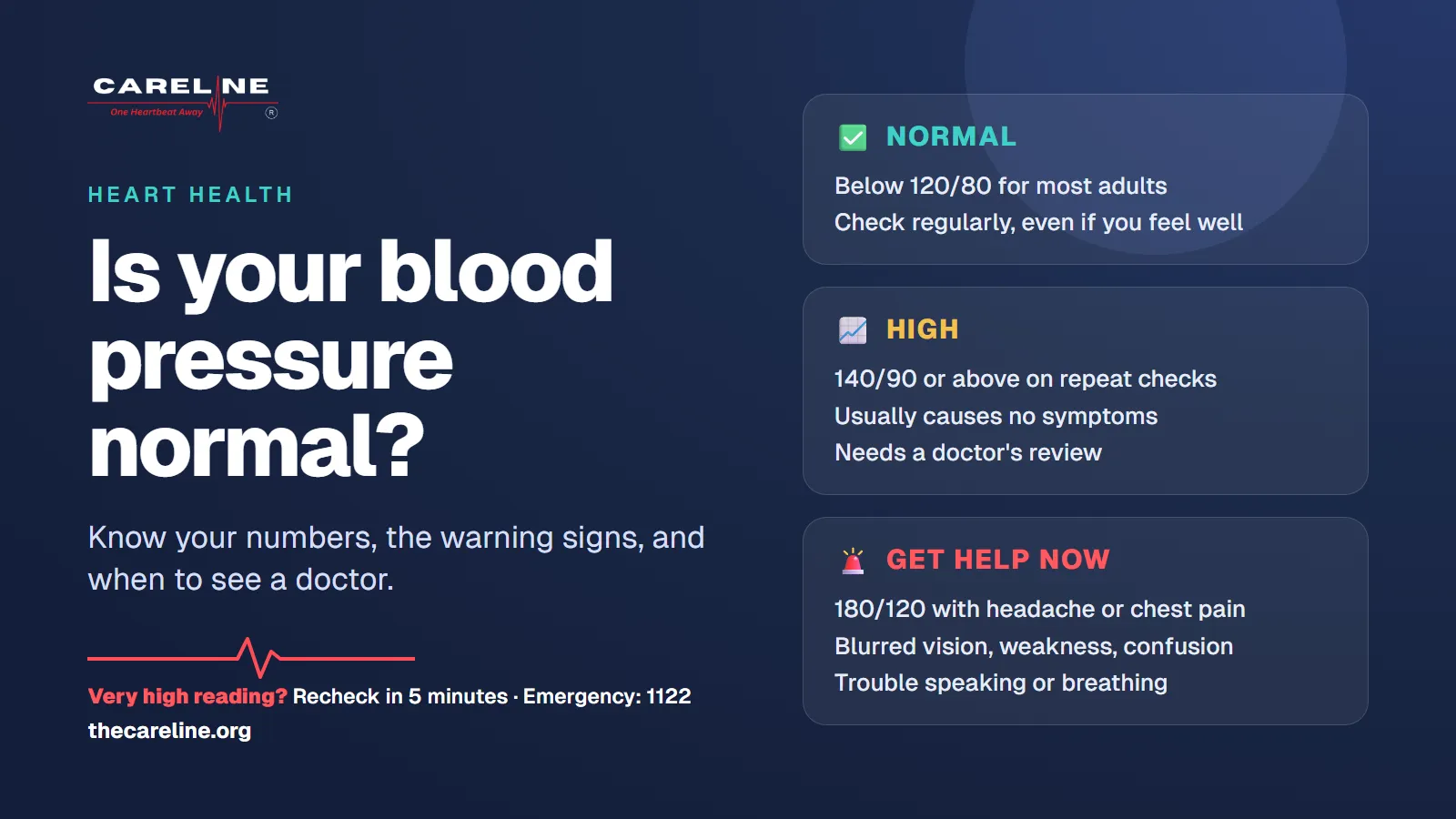
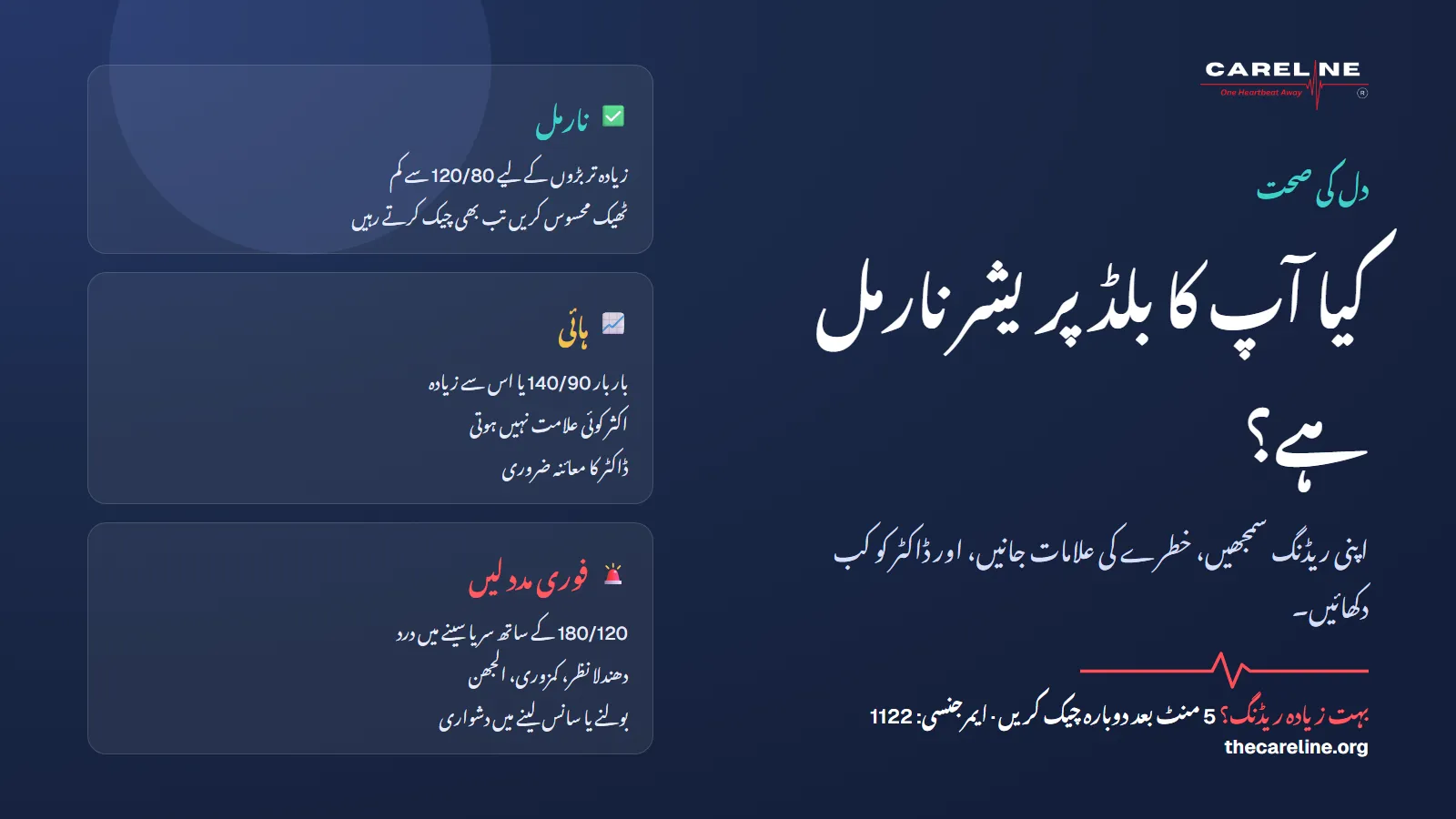
For most adults, a normal blood pressure is below 120/80 mmHg, and doctors diagnose high blood pressure (hypertension) when readings stay at 140/90 or above on two different days. High blood pressure usually causes no symptoms at all, so the only way to know is to have it measured; but if a reading is 180/120 or higher with a severe headache, chest pain, breathlessness, blurred vision, weakness or confusion, get emergency help straight away by calling 1122.
Many families in Pakistan only discover high blood pressure after something goes wrong: a parent collapses with a stroke, an uncle has a heart attack, or a routine check before surgery shows a frightening number. Others wait for a headache or dizziness as a sign, not knowing that most people with high blood pressure feel completely well. This guide explains what your blood pressure numbers mean, who is at risk, which symptoms matter, how to measure it correctly at home, and how a Remote Health Examination lets a specialist check your blood pressure and listen to your heart without a long trip to a hospital clinic.
What is blood pressure, and what do the two numbers mean?
Blood pressure is the force of blood pushing against the walls of your arteries as the heart pumps. It is written as two numbers, for example 120/80 mmHg. The top number (systolic) is the pressure when the heart beats; the bottom number (diastolic) is the pressure when the heart rests between beats. Both numbers matter. When the pressure stays high for months and years, it slowly damages the blood vessels, the heart, the kidneys, the brain and the eyes, even while the person feels fine.
How to read your blood pressure numbers
- Normal: below 120/80. Keep up a healthy lifestyle and check it regularly.
- Elevated: a top number of 120 to 129 with a bottom number below 80. This is an early warning to change habits.
- High blood pressure: readings of 140/90 or above on repeated checks are diagnosed as hypertension by the World Health Organization. Some guidelines, such as the American Heart Association, already treat 130/80 and above as high.
- Very high (hypertensive crisis): 180/120 or above. Wait five minutes, sit quietly and measure again. If it is still this high, a doctor needs to see the patient urgently, and if there are symptoms such as chest pain or weakness, call 1122.
Is normal blood pressure different by age?
People often search for a 'normal blood pressure by age' chart. Blood pressure does tend to rise with age, but rising pressure is common, not harmless. For adults of every age the healthy goal is still below 120/80, although a doctor may set a slightly different target for an older person, someone with kidney disease or diabetes, or a pregnant woman. Children have their own normal ranges based on age, sex and height, so a child's reading should always be judged by a doctor.
Why high blood pressure matters so much in Pakistan
The World Health Organization estimates that about 1.4 billion adults aged 30 to 79 had hypertension in 2024, roughly one in three people in that age group, and only about one in four of them had their blood pressure under control (WHO fact sheet on hypertension). WHO calls hypertension a major cause of heart attacks, strokes, heart failure and kidney damage.
In Pakistan the picture is serious. The second National Diabetes Survey of Pakistan, which measured blood pressure in 10,834 adults across all four provinces, found an age-adjusted prevalence of hypertension of 46.2%; and 21.3% of adults were newly diagnosed during the survey, meaning almost half of the people with high blood pressure did not know they had it (Basit et al., Clinical and Experimental Hypertension). The same study found the highest rate in Punjab at 49.2%, followed by Sindh at 46.3%, and linked hypertension with older age, family history, obesity, low physical activity and high cholesterol.
Symptoms of high blood pressure: why most people feel nothing
High blood pressure is often called a 'silent killer' because it rarely causes symptoms until damage is already happening. Many people believe that a headache, a red face, a feeling of heat or 'tension' means their pressure is up, and that they are fine when they feel well. Both ideas are risky. Someone can have a reading of 160/100 and feel normal, and a headache is far more often caused by stress, poor sleep, dehydration or eye strain than by blood pressure. Taking or stopping medicine based on how you feel, instead of what the reading shows, is one of the most common reasons blood pressure stays uncontrolled.
Signs that need a doctor soon
- Home readings that are repeatedly 140/90 or above, even if you feel well.
- Readings that have crept up despite taking your medicines.
- Dizziness, especially when standing up, after starting or changing blood pressure tablets.
- Swollen ankles, breathlessness on climbing stairs or waking at night short of breath.
- Frequent morning headaches together with high readings.
- High blood pressure in pregnancy, especially with swelling of the face or hands, which needs prompt review by a doctor.
Emergency warning signs: call 1122
- A reading of 180/120 or above with chest pain, pressure or pain spreading to the arm, jaw or back.
- Sudden weakness or numbness of the face, arm or leg, a drooping face or slurred speech, which can be a stroke.
- A sudden, severe headache unlike any before, with confusion, vomiting or blurred vision.
- Severe breathlessness or fainting.
Careline is not an emergency service. If you notice any of these signs, call 1122 or go to the nearest emergency department immediately. Do not take extra tablets to bring the pressure down quickly on your own, as dropping it too fast can also be dangerous.
Who is at risk, and what you can do about it
- Adults over 40, and anyone with a parent or sibling who has high blood pressure, diabetes, heart disease or a stroke.
- People who are overweight, especially with extra weight around the waist.
- People with diabetes or kidney disease.
- Diets high in salt: achaar, papad, namkeen snacks, processed meats, packaged foods and extra salt at the table.
- Smoking, naswar, shisha and little physical activity.
- Long-term stress and poor sleep, including untreated snoring with pauses in breathing.
Lifestyle changes really do lower blood pressure. Cut down on salt in cooking and avoid salty snacks; eat more vegetables, fruit, daal and whole grains; walk briskly for about 30 minutes on most days; lose weight if you are overweight; stop smoking and naswar; and try to sleep seven to eight hours. If your doctor prescribes medicine, take it every day at the same time, even when the readings look good, because the readings are good partly due to the medicine. Never stop or change tablets without asking your doctor, and tell them about any side effects.
How to measure blood pressure correctly at home
- Use an automatic upper-arm monitor with the correct cuff size; wrist monitors are less reliable.
- Avoid tea, coffee, smoking and exercise for 30 minutes before, and empty your bladder.
- Sit with your back supported, feet flat on the floor and arm resting at heart level. Rest quietly for five minutes.
- Do not talk during the reading. Take two readings a minute apart and write both down with the date and time.
- Measure in the morning and evening for a week before a doctor's visit, and bring the notebook or phone record.
How a Remote Health Examination helps with blood pressure
A number on a home machine is a starting point, not a diagnosis. A doctor needs to confirm the reading, look for the cause and check whether the heart and other organs are under strain. That is what makes a Remote Health Examination much more than a video call: it is a real clinical examination. A trained Careline care manager comes to your home, clinic, pharmacy or workplace with the eEVA™ CareStation by 73Health Global, Finland, and a PMDC-verified specialist examines the patient live:
- Blood pressure is measured with a medical-grade device, so the specialist sees a reliable reading taken the right way.
- The digital stethoscope lets the specialist listen to the heart for murmurs or an irregular rhythm, and to the lungs for signs of fluid.
- The pulse oximeter shows the oxygen level and pulse rate.
- The thermometer checks for fever when other symptoms are present.
- The HD examination camera lets the doctor look at swelling of the ankles, the skin, the eyes and the patient's general condition.
ECG and ultrasound are coming to the eEVA™ kit and are not available yet. After the examination the specialist can confirm whether the blood pressure is truly high, review the medicines the patient already takes, explain the lifestyle changes that matter most, and advise whether tests such as blood sugar, kidney function, cholesterol, urine or an ECG are needed, or whether the patient should be seen in person. For an elderly parent with high blood pressure who finds travel tiring, regular follow-up at home can make it easier to keep the pressure under control. Employers can also arrange blood pressure screening and examinations on site through our institutions and workplaces programme.
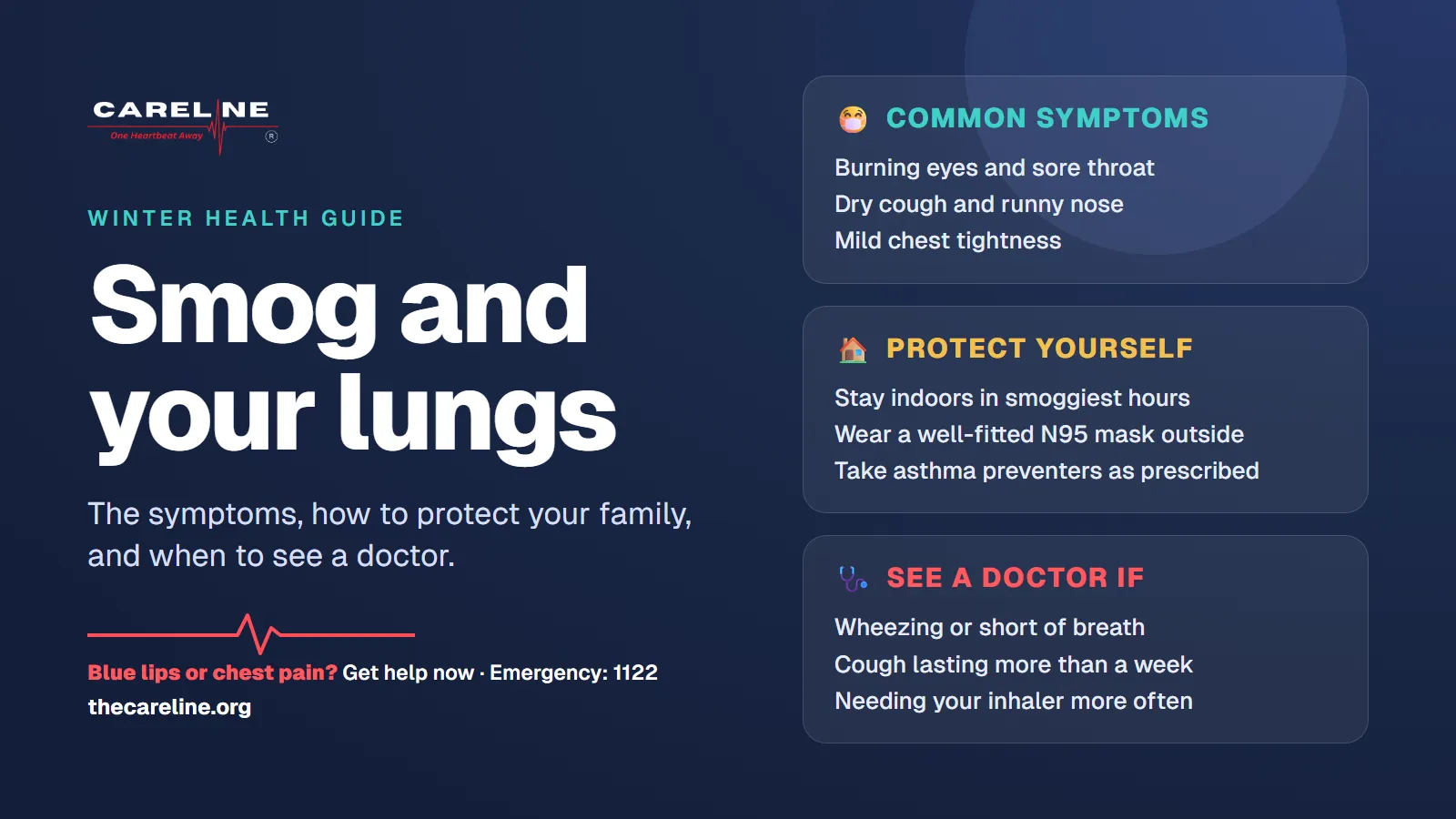
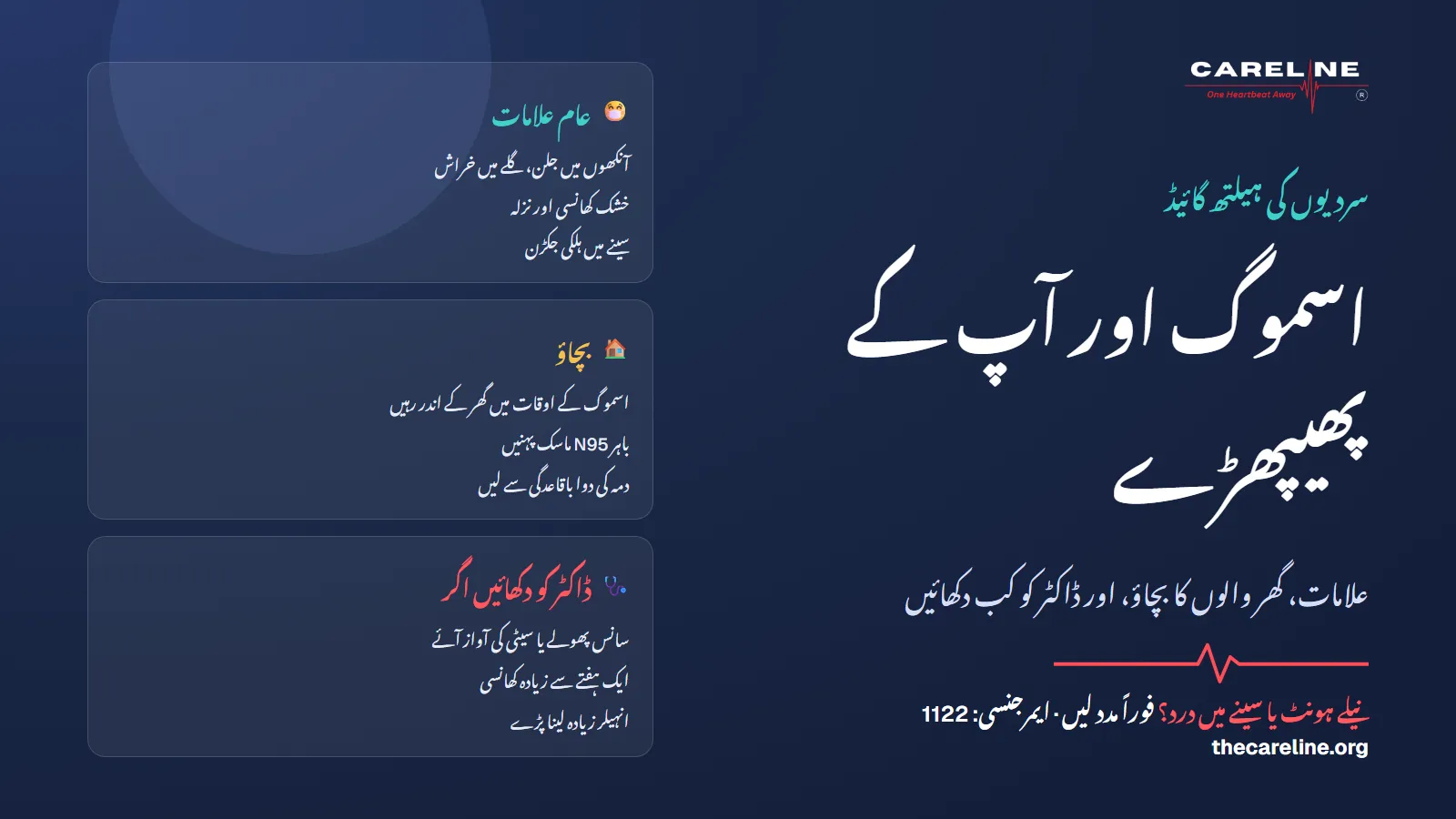
Winter smog can also add strain to the heart and blood vessels of people with high blood pressure. If someone at home has a cough or breathlessness as well, read our guide on smog and your lungs.
How to book a blood pressure examination with Careline
Careline currently serves Karachi, with Lahore and more cities coming next. Message or call us on WhatsApp at +92 310 2145333 with the patient's age, recent blood pressure readings, current medicines and any conditions such as diabetes, kidney or heart disease, and we will arrange a care manager visit and a specialist examination. You can read more about how Careline care works or contact us with any question.
Frequently asked questions
What is normal blood pressure for adults?
For most adults a healthy blood pressure is below 120/80 mmHg. Readings that stay at 140/90 or above on two different days are diagnosed as high blood pressure. A doctor may set a different target for older adults, pregnant women or people with diabetes or kidney disease.
What are the symptoms of high blood pressure?
Most people with high blood pressure have no symptoms. Very high readings can come with severe headache, chest pain, breathlessness, blurred vision, weakness or confusion, which need emergency care. The only reliable way to know your blood pressure is to measure it.
Does high blood pressure cause headaches?
Usually not. Most headaches are caused by stress, poor sleep, dehydration or eye strain. A sudden, severe headache with a reading of 180/120 or above, confusion or vision changes is an emergency: call 1122.
What blood pressure reading is dangerous?
A reading of 180/120 or above is a hypertensive crisis. Rest for five minutes and measure again. If it is still that high, see a doctor urgently, and if there is chest pain, weakness, trouble speaking or breathlessness, call 1122.
Can I stop my blood pressure medicine when my readings are normal?
No. Normal readings often mean the medicine is working. Stopping suddenly can make the pressure rise again. Always ask your doctor before stopping or changing any blood pressure tablet.
Can a doctor check my blood pressure at home in Karachi?
Yes. With a Careline Remote Health Examination, a care manager brings the eEVA™ CareStation to your home and a specialist measures your blood pressure, listens to your heart and lungs and reviews your medicines live.