What are the health effects of smog and when should I see a doctor?
Smog and your lungs: symptoms, protection and when to see a doctor
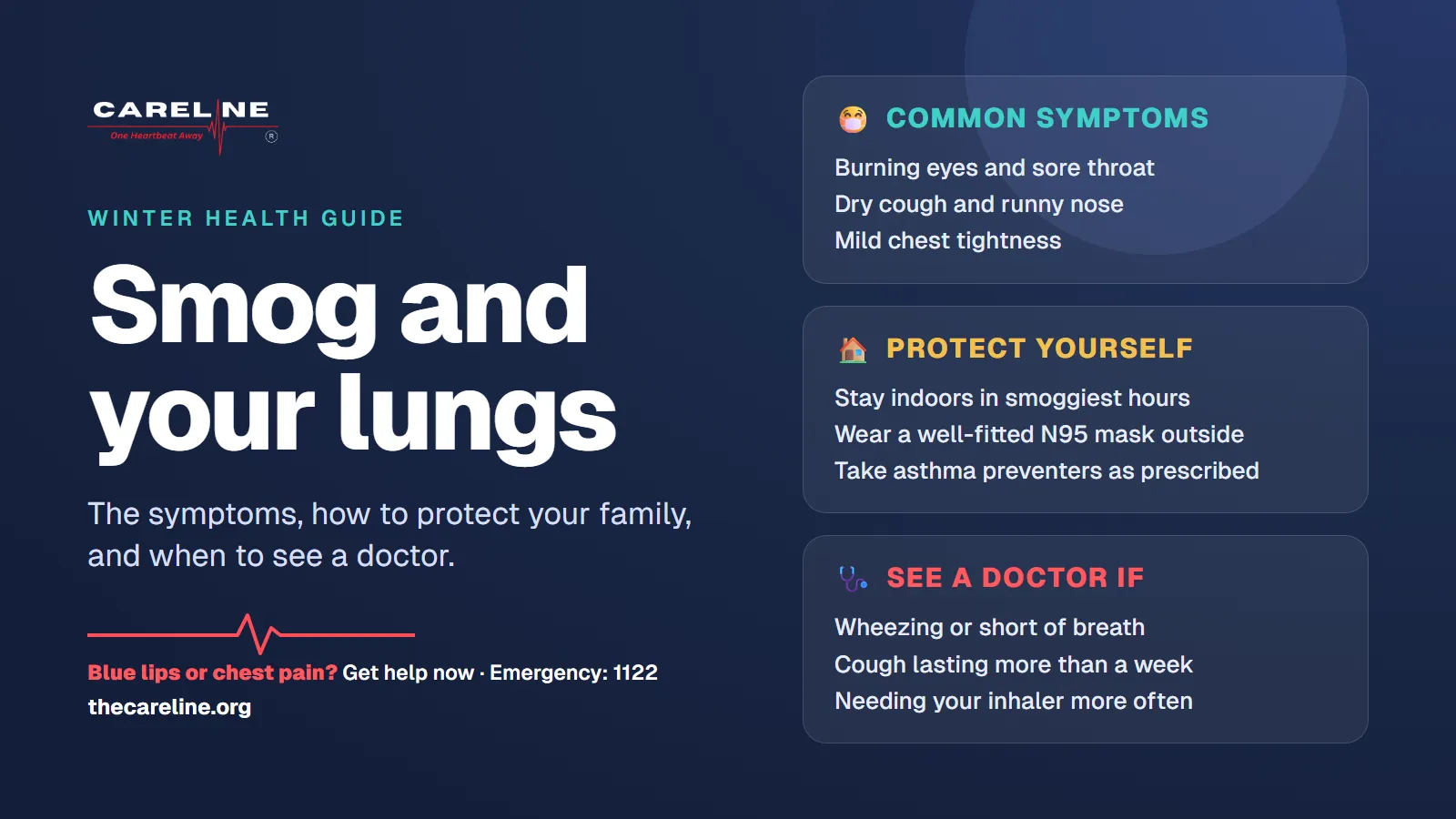
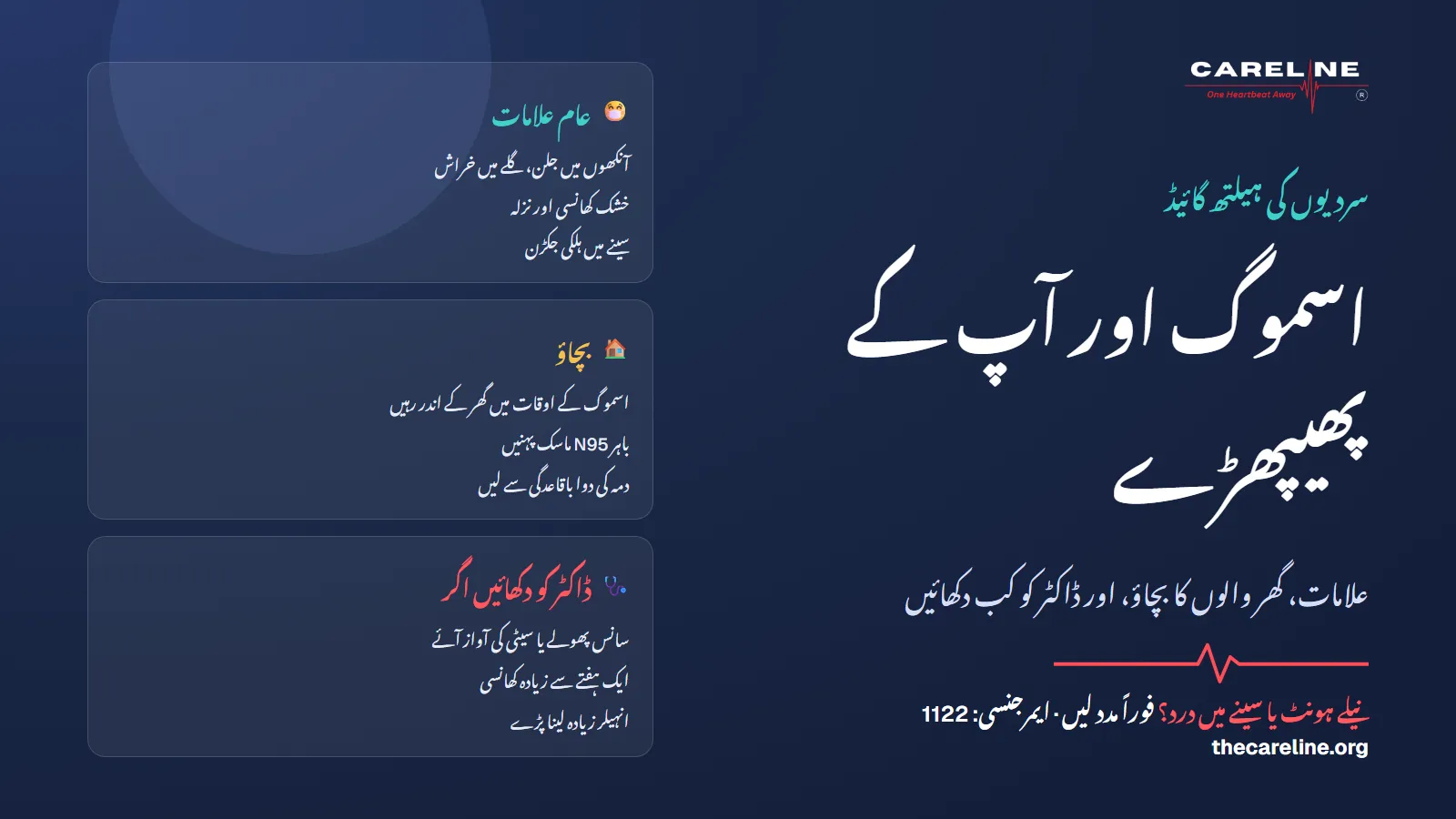
Smog usually causes burning eyes, a scratchy throat, a dry cough and a tight or heavy chest, and in people with asthma, COPD or heart disease it can trigger a serious flare-up. See a doctor the same day if you are wheezing, short of breath when resting or walking, using your reliever inhaler more than usual, coughing for more than a week, or if a child, an elderly parent or a pregnant woman in the family has breathing trouble; call 1122 if someone cannot speak in full sentences, their lips turn blue or they have chest pain.
Every winter the air over Pakistan's cities turns grey. In Punjab the season brings hospital alerts and school closures, and in Karachi the early-morning haze of dust, vehicle smoke and industrial fumes has become a regular sight. Families then ask the same questions: is this cough just the weather, or is it the start of something that needs treatment? Should grandfather with COPD be going for his morning walk? Why is the children's asthma worse every November? This guide explains what smog does to the body, who is most at risk, the symptoms that mean you should not wait, and how a Remote Health Examination lets a specialist listen to your chest at home, without sitting in a crowded clinic while the air outside is at its worst.
What is smog and why does it hurt the lungs?
Smog is a mixture of smoke, dust, gases and very fine particles that hangs low over a city when the air is cold and still. In winter a layer of cooler air near the ground traps pollution from traffic, factories, brick kilns, burning rubbish and crop stubble, so it builds up day after day instead of blowing away. The most harmful part is fine particulate matter, called PM2.5: particles so small that they pass the nose and throat, travel deep into the lungs and can even enter the bloodstream.
Once inside, these particles irritate and inflame the lining of the airways. The airways swell, produce more mucus and become twitchy, so they tighten more easily. That is why smog brings on coughing, wheezing and breathlessness, and why it is especially hard on lungs that are already sensitive. Inflammation does not stop at the lungs: fine particles also strain the heart and blood vessels, which is why doctors see more heart attacks and strokes during heavy pollution episodes.
How big is the problem in Pakistan?
The World Health Organization estimates that outdoor air pollution is linked to about 4.2 million premature deaths worldwide each year, most of them in low- and middle-income countries, through heart disease, stroke, COPD, lung infections and lung cancer (WHO fact sheet on ambient air quality and health). WHO also notes that short-term exposure can worsen asthma and increase hospital admissions for breathing and heart problems.
Pakistan feels this every winter. In early November this year, the three allied hospitals in Rawalpindi recorded 2,961 patients with smog and pollution-related illnesses in their outpatient and emergency departments within 48 hours, as smog reached dangerous levels across major Punjab cities (The Express Tribune). In Karachi, doctors told Dawn that patients with asthma, bronchitis, COPD and pneumonia had roughly doubled in a year of heavy dust pollution (Dawn), and a study led by the Aga Khan University linked high PM2.5 levels in the city's air with lung disease (The News).
Who is most at risk from smog?
- Children, because their lungs are still growing and they breathe faster, taking in more polluted air for their size.
- Older adults, especially those with weak lungs or heart disease.
- People with asthma or COPD, whose airways react strongly to irritants.
- People with heart disease, high blood pressure or diabetes, since pollution adds strain to the heart and blood vessels.
- Pregnant women, as heavy pollution exposure is linked with problems for both mother and baby.
- Smokers and anyone who cooks over wood or coal indoors, because their lungs are already exposed to smoke.
- Outdoor workers, such as traffic police, drivers, vendors and construction workers, who breathe street-level air for hours.
Smog symptoms: what is common and what is a warning sign
Common symptoms during smoggy days
- Burning, watery or red eyes.
- A scratchy or sore throat and a dry cough.
- A runny or blocked nose and sneezing.
- Mild chest tightness or feeling that you cannot take a full breath.
- Headache and tiredness.
These often ease when you stay indoors with clean air and drink plenty of fluids. But they are not always 'just smog'. A cold, flu, a chest infection or the start of an asthma attack can look the same in the first days, and winter is also the season when these infections spread. If fever is part of the picture, our guide on telling flu from dengue may help you decide what to watch for.
Warning signs: arrange an examination the same day
- Wheezing (a whistling sound when breathing out) or chest tightness that does not settle with rest.
- Shortness of breath when walking, climbing stairs or talking.
- Needing your reliever (blue) inhaler more often than usual, or it not lasting as long.
- A cough that has lasted more than a week, or cough with yellow or green phlegm.
- Fever with cough, which can mean a chest infection or pneumonia.
- A child breathing fast, with the skin pulling in between the ribs or below the neck, or a child who is too breathless to feed or play.
- An older parent who seems more confused, drowsy or breathless than usual.
- Swollen ankles or palpitations in someone with heart disease.
Some signs need emergency care straight away: severe breathlessness, being unable to speak in full sentences, blue or grey lips or fingertips, chest pain or pressure, fainting, or a reliever inhaler that is not helping at all. Careline is not an emergency service. In an emergency call 1122 or go to the nearest emergency department.
How to protect your family on smoggy days
- Check the air quality each morning on a reliable air-quality app or the provincial environment department's updates, and plan outdoor time when it is lower.
- Move morning walks and exercise indoors on bad days, especially for older adults and anyone with asthma, COPD or heart disease.
- Keep windows and doors closed during the smoggiest hours, usually early morning and late evening, and air the house briefly when the air is clearer.
- If you must go out, a well-fitted N95 or similar mask filters fine particles far better than a cloth mask or a dupatta.
- Do not burn rubbish, leaves or wood near the house, and keep children away from cigarette, shisha and cooking smoke.
- Drink plenty of water and warm fluids to keep the throat and airways moist.
- If you have asthma or COPD, take your preventer medicine every day exactly as prescribed, even when you feel well, and carry your reliever inhaler.
- Do not start antibiotics, steroids or cough syrups on your own; many smog coughs do not need antibiotics, and the wrong medicine can hide a serious problem.
If someone at home has asthma or COPD
Ask your doctor for a written action plan before the smog season peaks: which medicines to take every day, what to do when symptoms increase, and when to seek urgent care. Check that inhalers are not empty or expired and that the person is using the correct technique, because many people inhale too fast or forget to use a spacer. Keep a simple diary of symptoms and inhaler use. If reliever use is creeping up, it is a sign the airways are getting more inflamed, and a doctor should review the treatment before it becomes an attack.
How a Remote Health Examination checks your chest at home
A doctor cannot judge a wheeze or a chest infection by hearing a cough over the phone. Listening to the lungs and measuring oxygen are part of a proper examination, and that is what makes a Remote Health Examination different from a video call. A trained Careline care manager comes to your home, clinic or workplace with the eEVA™ CareStation by 73Health Global, Finland, and a PMDC-verified specialist examines the patient live:
- The digital stethoscope lets the specialist listen to the lungs for wheeze, crackles or reduced air entry, and to the heart.
- The pulse oximeter shows the oxygen level and pulse rate, which helps the doctor judge how hard the lungs are working.
- A medical thermometer checks for fever, which can point to a chest infection rather than irritation from smog.
- Blood pressure is measured, which matters for older adults and anyone with heart disease when pollution is high.
- The HD examination camera lets the doctor look at the throat, eyes, skin and lips, and see how the patient is breathing.
- The otoscope helps when a child's cold has also spread to the ears.
A peak flow (PEF) meter, ECG and ultrasound are coming to the eEVA™ kit; they are not available yet. Based on the examination, the specialist can advise whether the symptoms look like smog irritation, an asthma or COPD flare-up or a chest infection, whether medicines need to change, how to use inhalers correctly, and whether the patient needs an X-ray, blood tests, lung function tests or an in-person visit. For an elderly parent who finds it hard to travel, or a family with small children, this means a specialist examination without a trip through polluted traffic to a waiting room full of coughing patients.
Employers and schools can also bring examinations on site during the smog season. Read more about our work with institutions and workplaces.
How to book a chest examination with Careline
Careline currently serves Karachi, with Lahore and more cities coming next. Message or call us on WhatsApp at +92 310 2145333 with the patient's age, their symptoms, how long they have had them and any conditions such as asthma, COPD or heart disease, and we will arrange a care manager visit and a specialist examination. You can read more about how Careline care works or contact us with any question.
Frequently asked questions
What are the symptoms of smog on health?
Smog commonly causes burning or watery eyes, a sore throat, dry cough, runny nose, chest tightness, headache and tiredness. In people with asthma, COPD or heart disease it can trigger wheezing, breathlessness and chest pain that need a doctor.
How long does a smog cough last?
Irritation from smog often eases within a few days of breathing cleaner air. A cough that lasts more than a week, brings up coloured phlegm or comes with fever or breathlessness should be examined by a doctor.
Can smog cause asthma attacks?
Yes. Fine particles in smog inflame and tighten the airways, so people with asthma often need their reliever inhaler more on smoggy days. Taking preventer medicine regularly and having a written action plan from a doctor helps.
Which mask protects against smog?
A well-fitted N95 or similar respirator mask filters fine particles much better than cloth or surgical masks. It should cover the nose and mouth snugly. Staying indoors during the smoggiest hours also lowers exposure.
Is smog dangerous for children and elderly parents?
Children and older adults are among the most vulnerable. Watch for fast breathing, ribs pulling in, poor feeding in children, and new confusion, drowsiness or breathlessness in older adults, and get them examined the same day.
Can a doctor examine my chest at home in Karachi?
Yes. With a Careline Remote Health Examination, a care manager brings the eEVA™ CareStation to your home and a specialist listens to your lungs live through a digital stethoscope and checks oxygen level, temperature and blood pressure.