How do I know if it is flu or dengue?
Flu or dengue? How to tell the difference, and when to see a doctor
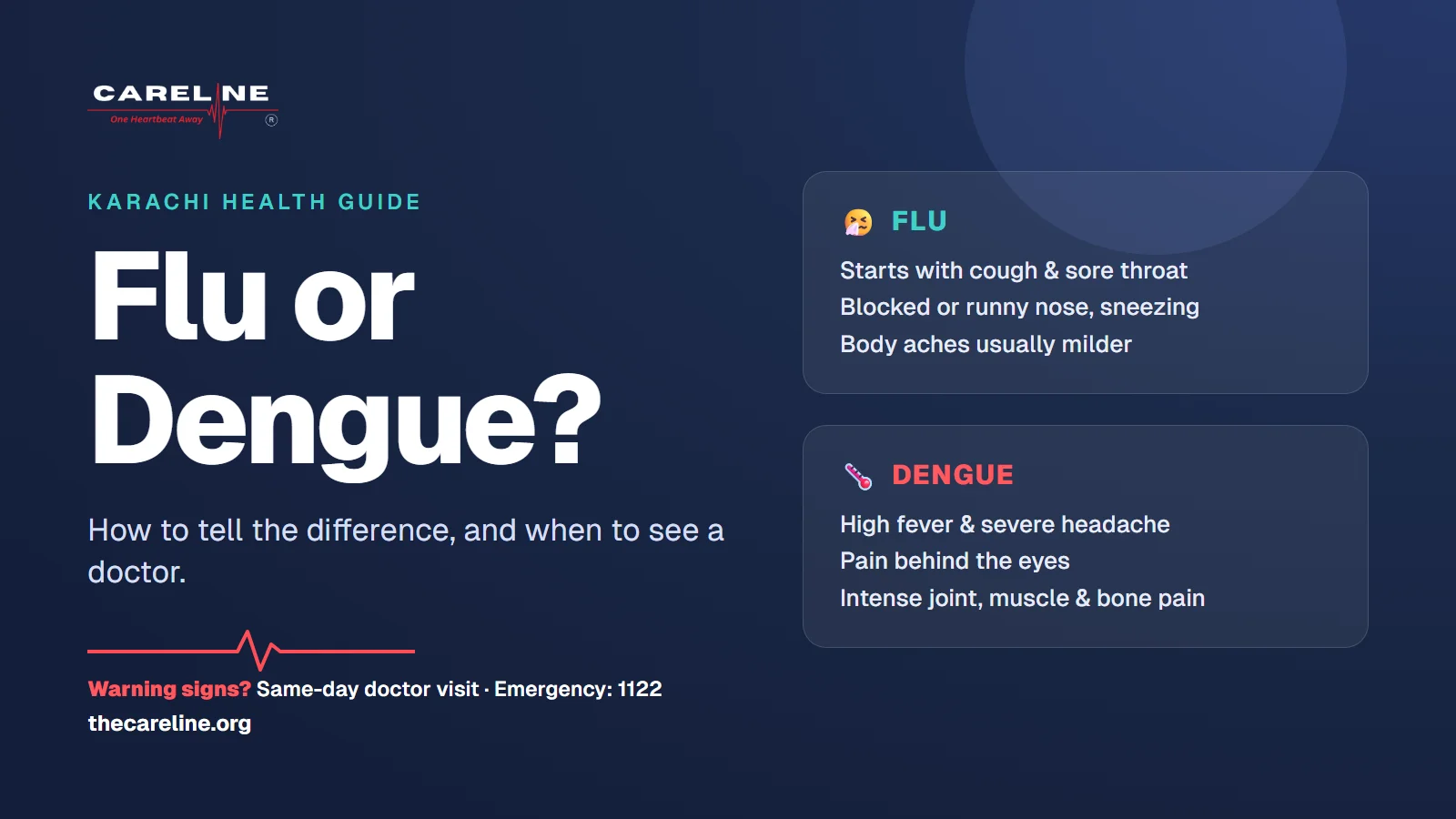
Flu usually starts suddenly with fever, a dry cough, a sore throat and a runny nose, while dengue typically brings a high fever with severe body and joint pain, pain behind the eyes and sometimes a rash, but little or no cough. If anyone with fever shows warning signs such as severe stomach pain, repeated vomiting, bleeding gums or nose, fast breathing or unusual drowsiness, they need a doctor the same day, and in an emergency you should call 1122.
This question matters in Karachi right now. Doctors have described a sharp rise in seasonal flu across the city's hospitals (ARY News), and the tail end of the dengue season overlaps with the start of flu season every year. Families end up guessing at home: is this just the flu going around, or is it something that needs a test today? This guide explains the difference in plain language, lists the warning signs doctors look for, and shows how a Remote Health Examination lets a specialist examine your family member at home instead of leaving you to guess.
Why flu and dengue are so easy to confuse
Both illnesses begin with fever, tiredness, headache and body aches, and both are common in Pakistan at the same time of year. Influenza is a respiratory virus that spreads from person to person through coughs, sneezes and close contact. Dengue is spread by the bite of an infected Aedes mosquito, which breeds in clean standing water around homes: water tanks, flower pots, old tyres and coolers. You cannot catch dengue from another person in the room, but several people in one house can be bitten by the same mosquitoes.
The scale of both is large. The World Health Organization estimates around a billion cases of seasonal influenza every year worldwide, with 3 to 5 million of them severe (WHO influenza fact sheet)). Dengue has spread rapidly across Asia, and Sindh has seen days with more than a thousand new confirmed cases during outbreak periods (Dawn). With so many people ill at once, clinics get crowded and families often wait too long before anyone examines the patient.
Flu vs dengue: the signs side by side
Signs that point more towards flu
- Sudden fever with chills.
- Dry cough, sore throat, blocked or runny nose and sneezing.
- Body aches and headache, usually milder than in dengue.
- Others at home, school or the office have the same cough and cold symptoms.
- Most healthy adults feel better within about a week, although the cough can last longer.
Signs that point more towards dengue
- High fever that comes on quickly, often with a severe headache.
- Pain behind the eyes, especially when moving them.
- Severe muscle, joint and bone pain (the reason dengue is called 'breakbone fever').
- Nausea, vomiting and loss of appetite.
- A rash that can appear a few days after the fever starts.
- Little or no cough or runny nose.
WHO notes that dengue symptoms usually appear 4 to 10 days after the mosquito bite and last 2 to 7 days (WHO dengue fact sheet). These patterns are a guide, not a diagnosis. Only a doctor's examination, and where needed a blood test the doctor recommends, can tell you for certain.
The warning signs that need a doctor the same day
The most important thing families need to know about dengue is when it becomes dangerous. According to WHO, the warning signs of severe dengue often appear 24 to 48 hours after the fever goes away, which is exactly when many families relax and think the illness is over. Watch closely for:
- Severe or constant stomach pain.
- Vomiting that will not stop, or blood in vomit or stool.
- Bleeding from the gums or nose, or unusual bruising.
- Fast or difficult breathing.
- Extreme tiredness, restlessness or confusion.
- Cold, clammy or pale skin, or very little urine.
- Extreme thirst.
For flu, the people most at risk of complications are young children, adults over 65, pregnant women and anyone living with diabetes, heart, lung or kidney disease. Breathlessness, chest pain, a fever that returns after improving, bluish lips or a child who is unusually sleepy all need prompt medical attention. Careline is not an emergency service: if someone is struggling to breathe, bleeding or unresponsive, call 1122 or go to the nearest emergency department.
What to do at home while you wait for the examination
- Give plenty of fluids: water, ORS, soups and fresh juices. Dehydration makes both illnesses worse.
- Rest, and keep the patient in a cool, mosquito-free room. Use nets and repellent so the mosquitoes do not bite others in the house.
- Check the temperature regularly and write it down with the time; this record is very useful to the doctor.
- Do not give aspirin or ibuprofen-type painkillers when dengue is possible, because WHO advises against them in dengue; ask a doctor which fever medicine is safe and in what dose.
- Do not start antibiotics on your own. Flu and dengue are both caused by viruses, and antibiotics do not treat viruses.
- Empty and cover any standing water around the house to stop mosquitoes breeding.
How a Remote Health Examination helps tell the difference
Telling flu from dengue is a clinical judgement, and a doctor makes it by examining the patient, not by hearing symptoms on the phone. That is why a Remote Health Examination is different from a video call. A trained Careline care manager comes to your home with the eEVA™ CareStation from 73Health Global, Finland, and a PMDC-verified specialist examines your family member live through it:
- A medical thermometer gives the doctor an accurate temperature reading.
- A pulse oximeter shows oxygen saturation and pulse, which helps the doctor judge whether the lungs are affected.
- A digital stethoscope lets the specialist listen to the chest for signs of a chest infection.
- A blood pressure monitor helps the doctor check for the low blood pressure and dehydration that can come with severe dengue.
- An HD examination camera and otoscope let the doctor look at the throat, ears and skin, including any rash or bruising.
Based on that examination, the specialist can advise whether the illness looks like flu, whether a dengue blood test is needed and which one, how to manage the fever safely at home, and whether the patient should go to hospital. For elderly parents, young children and anyone who feels too unwell to sit in a crowded waiting room during flu season, that examination at home can make the difference between guessing and knowing.
How to book an examination with Careline
Careline currently serves families in Karachi, with more cities coming next. Message or call us on WhatsApp at +92 310 2145333, tell us the patient's age, symptoms and how long they have had a fever, and we will arrange a care manager visit and a specialist examination. You can also read more about how Careline care works or contact us with any question.
Frequently asked questions
How can I tell flu from dengue at home?
Flu usually comes with a cough, sore throat and runny nose. Dengue more often brings high fever, pain behind the eyes, severe body and joint pain and sometimes a rash, with little or no cough. Only a doctor's examination, and a blood test if the doctor advises it, can confirm which it is.
When is dengue most dangerous?
WHO notes that the warning signs of severe dengue often appear 24 to 48 hours after the fever goes away. Severe stomach pain, repeated vomiting, bleeding gums or nose, fast breathing or extreme tiredness need a doctor the same day.
Can I give ibuprofen or aspirin for a fever during dengue season?
WHO advises against aspirin and ibuprofen-type painkillers in dengue because they can increase the risk of bleeding. Ask a doctor which fever medicine and dose is safe for your family member.
Do antibiotics help with flu or dengue?
No. Both are caused by viruses, and antibiotics do not treat viral infections. Only take antibiotics if a doctor prescribes them for a confirmed bacterial infection.
Can a doctor examine my parent at home in Karachi?
Yes. With a Careline Remote Health Examination, a trained care manager brings the eEVA™ CareStation to your home and a specialist examines your parent live, including temperature, oxygen level, blood pressure and listening to the chest.
Is a Remote Health Examination the same as a video call?
No. The specialist examines the patient using medical instruments operated by a care manager at the patient's side: a digital stethoscope, pulse oximeter, thermometer, blood pressure monitor, otoscope and HD examination camera.