How do I know if my child has an ear infection and when should I see a doctor?
Child ear infection: the signs, home care and when to see a doctor
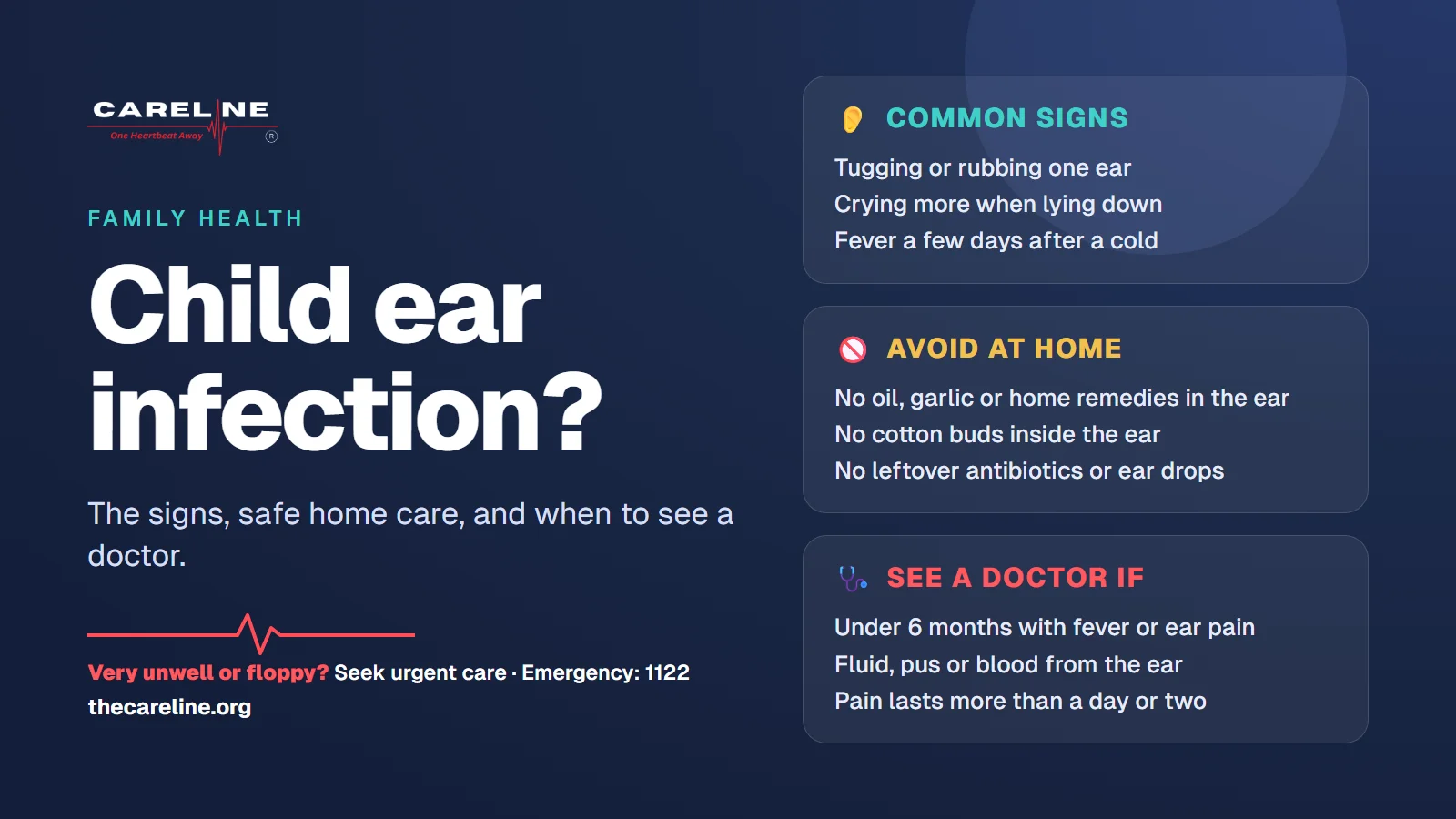
A child with an ear infection usually has ear pain, often a fever, and becomes fussy, cries more than usual or sleeps badly, typically a few days after a cold; babies and toddlers who cannot talk may tug or rub at the ear instead. See a doctor the same day if your child is under 6 months old, has a high fever, has fluid or pus coming from the ear, has swelling or redness behind the ear, or still has ear pain after a day or two, and call 1122 in an emergency.
Winter is ear infection season in Pakistani homes. Colds and flu spread quickly in crowded classrooms and family gatherings, and a blocked nose is often the first step towards a blocked, infected middle ear. Parents then face the same worry late at night: is this a passing earache, or does a doctor need to look inside the ear? This guide explains the signs in plain language, what you can safely do at home, which signs mean you should not wait, and how a Remote Health Examination lets a specialist look inside your child's ear without a trip to a crowded clinic.
What is a middle ear infection?
Behind the eardrum is a small air-filled space called the middle ear. It is connected to the back of the nose by a narrow channel, the Eustachian tube. When a child has a cold, an allergy or a sinus infection, this tube can swell and block. Fluid then collects behind the eardrum, and germs from the nose and throat can grow in it. Doctors call this acute otitis media. The pressure of the fluid on the eardrum is what causes the pain.
Children get ear infections far more often than adults because their Eustachian tubes are shorter, narrower and more level, so they block easily and drain poorly. Young children also catch more colds, especially once they start school or daycare. Sometimes fluid stays behind the eardrum after the infection settles, without pain. This is called otitis media with effusion, or 'glue ear', and it can quietly muffle a child's hearing for weeks.
How common are ear infections in Pakistani children?
Ear infections are among the most common reasons young children see a doctor. A multinational study that included more than a thousand children from Pakistan estimated about 138 episodes of acute otitis media per 1,000 child-years in the Pakistani group (Journal of Epidemiology and Global Health). A study of 400 children aged 1 to 5 years at hospitals in Rawalpindi found fluid behind the eardrum (glue ear) in 27% of them (PubMed Central), a reminder that many cases are silent and only found when a doctor looks into the ear.
Ear problems matter because hearing matters. The World Health Organization notes that a large share of childhood hearing loss comes from preventable causes, including ear infections, and that many of these can be managed when they are found early (WHO deafness and hearing loss fact sheet). Repeated or untreated infections can damage the eardrum and lead to a chronically discharging ear, which can affect speech, learning and confidence at school.
Signs of an ear infection in children
In babies and toddlers who cannot tell you
- Tugging, pulling or rubbing one ear.
- Crying more than usual, especially when lying down, because lying flat increases the pressure in the ear.
- Trouble sleeping or waking up repeatedly at night.
- Fever, often starting a few days after a cold or runny nose.
- Refusing feeds or crying while sucking, since swallowing changes pressure in the ear.
- Not responding to quiet sounds or to their name as usual.
In older children
- Ear pain or a feeling that the ear is full or blocked.
- Muffled hearing, or turning up the TV and asking you to repeat things.
- Headache, tiredness and loss of appetite.
- Fluid, pus or blood coming out of the ear. This can happen when the eardrum bursts; the pain often eases suddenly, but the child still needs a doctor.
None of these signs proves an ear infection on its own. Teething, a sore throat, wax and outer-ear infections ('swimmer's ear') can all cause ear pain. The only way to know is for a doctor to look at the eardrum with an otoscope, which is why examination matters more than describing symptoms over the phone.
When to see a doctor, and when it is an emergency
Many mild ear infections settle within a few days, and doctors sometimes advise watching carefully for a day or two before deciding on antibiotics. That decision should be made by a doctor who has examined the ear. Arrange an examination the same day if:
- Your child is under 6 months old and has a fever or seems to have ear pain.
- The fever is high, or your child seems very unwell, floppy or unusually sleepy.
- There is fluid, pus or blood coming from the ear.
- Ear pain lasts more than a day or two, or keeps coming back.
- Your child has had several ear infections in a few months.
- You notice reduced hearing that lasts more than a few weeks after an infection, or a delay in speech.
Some signs need emergency care: swelling, redness or tenderness behind the ear that pushes the ear forward, a stiff neck, severe headache, repeated vomiting, weakness of one side of the face, or a child who is hard to wake. Careline is not an emergency service. In an emergency call 1122 or go to the nearest emergency department straight away.
What you can safely do at home
- Ask a doctor which pain and fever medicine is suitable for your child's age and weight, and give it only in the dose they advise.
- Keep your child upright or slightly propped up when resting, which can ease the pressure.
- Offer plenty of fluids and small, soft meals.
- Do not put oil, garlic, onion juice or any home remedy into the ear. If the eardrum has a hole, these can cause further infection.
- Do not use cotton buds inside the ear, and do not try to clean out discharge deep in the ear canal.
- Do not start leftover antibiotics or give ear drops from the pharmacy without a doctor's advice; some drops are unsafe when the eardrum is perforated.
- Note when the pain and fever started and how high the temperature has been. This record helps the doctor.
Reducing the chance of repeat infections
- Keep children away from cigarette and shisha smoke; second-hand smoke is linked with more ear infections.
- If you bottle-feed, hold the baby upright rather than feeding them lying flat.
- Keep up with routine childhood vaccinations, which protect against some of the germs that cause ear infections.
- Teach handwashing and keep children with colds home when possible to slow the spread.
How a Remote Health Examination checks your child's ear at home
An ear infection is diagnosed by looking, not by guessing. That is what makes a Remote Health Examination different from a video call. A trained Careline care manager comes to your home with the eEVA™ CareStation by 73Health Global, Finland, and a PMDC-verified specialist examines your child live through it:
- The digital otoscope shows the specialist a clear, magnified view of the ear canal and eardrum, so they can see redness, bulging, fluid or a perforation.
- The HD examination camera lets the doctor look at the throat, nose and skin, and check behind the ear for swelling.
- A medical thermometer gives an accurate temperature reading.
- A digital stethoscope lets the specialist listen to the chest, since colds that cause ear infections can also affect the lungs.
- A pulse oximeter shows oxygen level and pulse rate, which helps the doctor judge how unwell your child is.
The care manager helps hold and settle your child, which matters a great deal with a frightened toddler. Based on what they see, the specialist can advise whether it looks like an ear infection or another cause of pain, whether antibiotics are needed or watchful waiting is safer, which medicines and doses are suitable, and whether your child needs an in-person ENT review or a hearing test. Because the images are captured during the visit, a follow-up examination a few weeks later can show whether the eardrum has returned to normal.
For families with several small children, working parents, or grandparents caring for grandchildren, this means no long wait in a crowded clinic full of coughing patients during cold and flu season. If you are also worried about fever in the family, our guide on telling flu from dengue may help.
How to book an ear examination with Careline
Careline currently serves families in Karachi, with Lahore and more cities coming next. Message or call us on WhatsApp at +92 310 2145333 with your child's age, their symptoms and how long they have had them, and we will arrange a care manager visit and a specialist examination at home. You can read more about how Careline care works, meet our specialists or contact us with any question.
Frequently asked questions
How can I tell if my baby has an ear infection?
Babies often tug or rub the ear, cry more when lying down, sleep badly, refuse feeds and may have a fever, usually a few days after a cold. Only a doctor looking at the eardrum with an otoscope can confirm an ear infection.
Do all ear infections in children need antibiotics?
No. Many mild ear infections settle on their own within a few days, and doctors sometimes advise careful watching first. A doctor who has examined the ear should decide whether antibiotics are needed and which one.
Is it safe to put oil or garlic in my child's ear for pain?
No. Home remedies placed in the ear can cause further infection, especially if the eardrum has a hole. Ask a doctor about suitable pain relief instead.
What does fluid coming from my child's ear mean?
Discharge can mean the eardrum has burst because of pressure from an infection, or that there is an infection of the ear canal. The pain may ease, but your child still needs a doctor to examine the ear.
Can recurring ear infections affect my child's hearing?
Yes. Fluid behind the eardrum can muffle hearing for weeks, and repeated infections can damage the eardrum. If your child seems not to hear well or has delayed speech, ask a doctor about a hearing check.
Can a doctor check my child's ear at home in Karachi?
Yes. With a Careline Remote Health Examination, a care manager brings the eEVA™ CareStation to your home and a specialist looks inside your child's ear live through a digital otoscope, along with checking temperature, chest and oxygen level.